
Burn Injury Recovery: First Aid, Healing Stages and Scar Care
Cool a burn under running water for 20 minutes, then cover it loosely with a nonstick dressing. Skin heals in three stages and scar care with silicone, massage and sun protection begins once the wound closes. Seek medical care for large, deep, or infected burns.
A burn can change a normal day in seconds, and what you do in the first few minutes shapes how the skin heals. Understanding burn injury treatment recovery from the first rinse to the final scar check helps you stay calm and make sound choices. Whether the injury came from a hot pan or a splash of boiling water, the basics are similar: act quickly, protect the wound, and know when to ask for help. Below you will find first aid steps, wound care routines, the stages skin passes through, scar care, and clear signs that it is time for professional help.
Key Takeaways
- Fast cooling limits tissue damage, so start rinsing before you do anything else.
- Healing happens in stages, and deeper burns take longer and scar more often.
- New skin stays sensitive to sunlight for many months, so protect it.
- Signs of infection, or a burn that is not improving, call for a doctor's visit.
First Aid in the First 20 Minutes
Speed matters more than perfection here. Heat can keep injuring skin after the source is gone, so start right away and get help quickly for serious burns. Work through these steps in order:
- Move away from the heat source, then take off rings, watches, or tight clothing near the burn unless fabric is stuck to the skin.
- Hold the burn under cool running water for 20 minutes, ideally within three hours of the injury.
- If there is no tap nearby, use cool bottled water or a wet towel.
- Cover the area loosely with cling film or a clean nonstick dressing.
- Keep the rest of the body warm, especially after a large burn.
Skip ice, iced water, butter and greasy creams, because they can damage tissue that is already injured. Chemical burns need longer rinsing and electrical burns always need emergency care.
What Burn Injury Treatment Recovery Looks Like Over Time
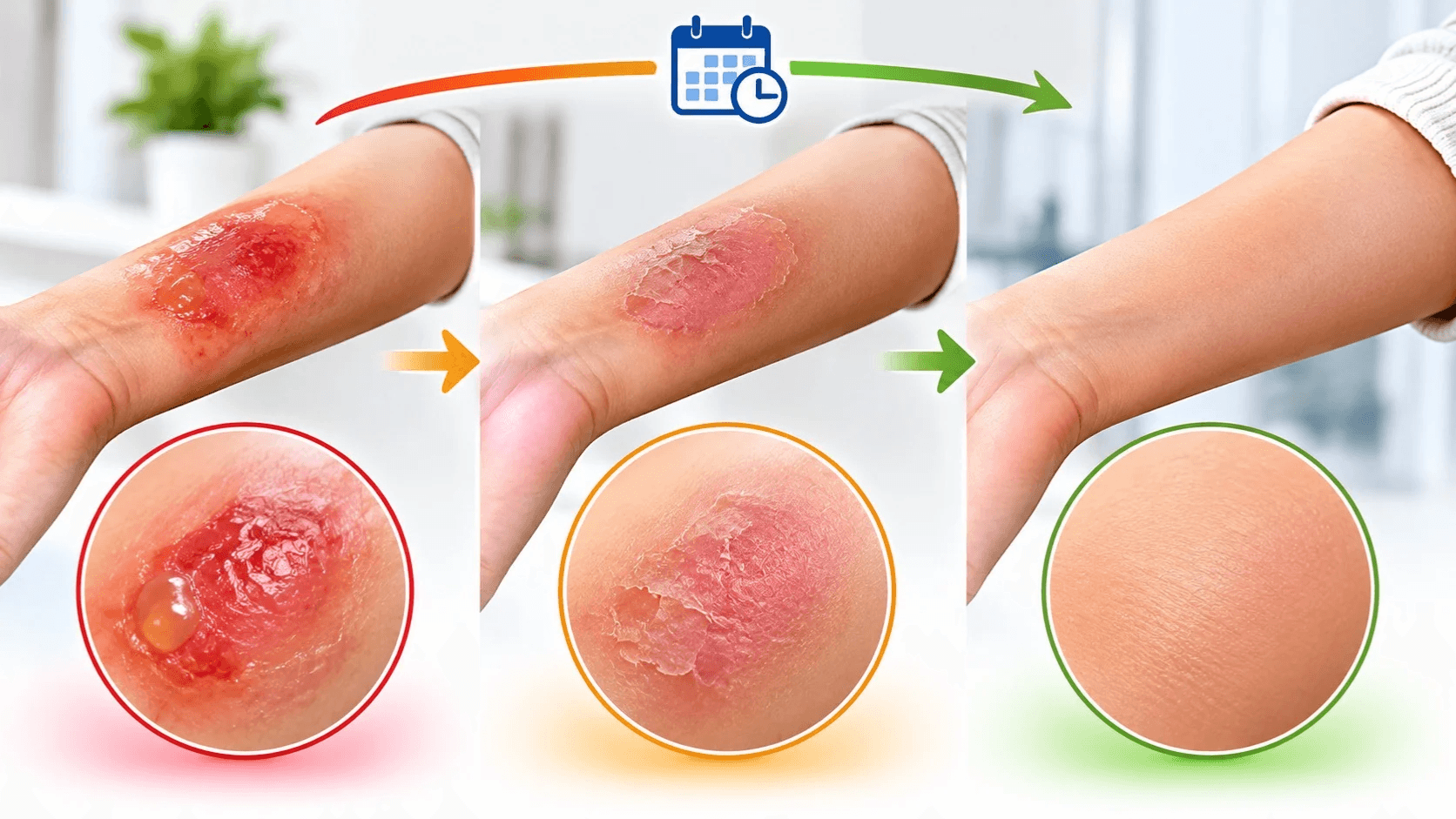
Skin repairs itself in three overlapping stages and knowing them makes the process feel less alarming. The stages blend together rather than starting on a fixed date, so a wound can often look different each week.
Stage 1: Inflammation
During the first days, the area looks red, swollen and tender as the body sends immune cells to clear away damage. Burns that go deeper than the top layer may blister.
Stage 2: New Tissue
After several days or weeks, the body forms new tissue and begins healing the wound. Peeling and itching are typical at this stage.
Stage 3: Remodeling
Once the skin heals, the tissue continues to develop for several months. Scarring fades slowly, although changes in skin color persist.
Second-degree burn healing depends mostly on depth. Healing will usually occur between two to three weeks for superficial burns, but deep burns might take longer and may require skin grafting.
Burn Wound Care at Home for Minor Burns
Small, shallow burns can often be managed at home once they have been cooled properly. Wash your hands, clean the area gently with mild soap and water and pat it dry instead of rubbing. Raise a burned arm or leg for the first day or two to ease swelling and keep moving it gently so new skin does not tighten.
Leave blisters alone. They protect the raw skin underneath and breaking them raises the risk of infection. An over-the-counter pain reliever, used as the label directs, can ease soreness and a pharmacist can suggest a suitable ointment.
Burn Dressing Care: Keeping the Wound Protected
A sterile non-stick dressing will help protect your burn from bacteria and irritation. Depending upon the burn, how often it is to be changed will vary, so just stick to your caregiver's schedule. An easy process to do:
Wash your hands before touching the dressing.
Soak a stuck dressing with clean water instead of pulling it away.
Look at the wound each time and note any change in color, swelling, or drainage.
Apply a fresh dressing that is snug but never tight.
Burn Scar Treatment Options Once the Skin Closes
Scars are most likely after deeper burns or slow healing. Wait until the wound is fully closed before starting scar care, then ask your care team which of these suit you:
Gentle massage with moisturizer, adding pressure over time as advised.
Silicone gel or sheets, which can help flatten and soften scars.
Pressure garments for larger burns, when prescribed.
Stretching and regular movement to keep skin flexible over joints.
Sunscreen or clothing cover, since new skin is sensitive for months.
Laser therapy or surgery for stubborn or tight scars, recommended by a specialist.
Discoloration may fade slowly and in some cases it stays.
Know When to See a Doctor for a Burn
Get emergency help for burns that are large, deep, numb, white, charred, or black, for electrical or chemical burns and when smoke inhalation or breathing trouble is possible.
Arrange a prompt medical visit if any of these apply:
- The burn blisters, other than a very small one.
- It affects the face, hands, feet, groin, or a major joint.
- The person burned is a baby, young child, older adult, or has diabetes.
- Pain worsens, redness spreads, or fluid turns thick or foul-smelling.
- There has been no clear improvement after about two weeks.
Conclusion
Burns heal best when the first minutes, the daily care and the follow-up all get attention. Each stage asks something different of you, from rinsing and covering early on to gentle massage and sun care later. Cooling quickly, protecting the wound and watching for warning signs give new skin its best chance and patience with scars pays off long after the wound closes.
If you are planning your burn injury treatment recovery, keep this guide handy and ask your care team to tailor it to your burn. Do not hesitate to call a healthcare provider when something looks wrong, because early advice is easier than fixing a problem later. For more wound care information, visit Regenxonline.
Frequently Asked Questions
1. Should I cover a burn or leave it open to air?
Cover it loosely with a clean nonstick dressing or cling film. A covering protects the tender skin from germs and friction and it usually makes the burn more comfortable.
2. How long does a second-degree burn take to heal?
A superficial one usually heals within two to three weeks. Deeper burns take longer and healing time also depends on the burn's size, cause and location on the body.
3. Should I pop a burn blister?
No. A blister acts as a natural shield over raw skin. Breaking it invites infection, so leave it intact and have a doctor look at it if it is large or painful.
4. Will every burn leave a scar?
Not always. Scarring depends on burn depth and healing time, so shallow burns often heal without a visible scar, while deeper ones are more likely to leave one.
5. Do burn scars need sun protection?
Yes. Healed burn skin is very sensitive for several months. Cover the area with clothing or apply sunscreen when outdoors, because sun exposure can make discoloration more noticeable.
Talk to a Professional About Your Burn
If a burn is blistering, spreading, or healing slower than expected, contact a qualified healthcare provider soon so the wound can be assessed and a safe care plan can begin.