How Advanced Wound Healing Treatments Support Wound Recovery
Advanced wound healing treatments can support recovery and, in some cases, speed it up by treating the reason a wound is stuck. Options such as debridement (only when dead or infected tissue is present), specialized dressings, negative pressure therapy, skin substitutes, biological grafts, and oxygen therapy clean the wound, improve conditions for new tissue, and protect against infection.
Some wounds close with basic care. Others stall, and that is when Advanced Wound Healing West Palm Beach services can make a real difference. These treatments are usually considered when a wound has not improved after about four weeks of standard care. In this article, we explain how each major treatment works, which wounds it suits, what recovery involves, and how to know when it is time to ask for help.
Key Takeaways
- Advanced treatments are designed for wounds that stall despite basic care.
- Each option targets a specific barrier, such as dead tissue, poor oxygen, or lost skin structure.
- Advanced treatments do not always speed up healing. Results depend on the wound type, the treatment chosen, and the patient's overall health.
- Following the care plan at home matters as much as the clinic visit.
Why Some Wounds Need More Than Basic Care
Cleaning and covering a wound works when blood flow, blood sugar, and pressure on the area are under control. When they are not, tissue does not get enough oxygen and nutrients, inflammation lingers, and bacteria settle into dead tissue. Advanced treatments are chosen to remove these barriers so the body can rebuild skin on its own schedule.
How Advanced Treatments Support Healing
Each advanced treatment works on a different part of the healing process. Here is how the main options work and where they fit. Not every wound needs every treatment, and the right choice depends on the wound and the patient.
Debridement and Wound Bed Preparation
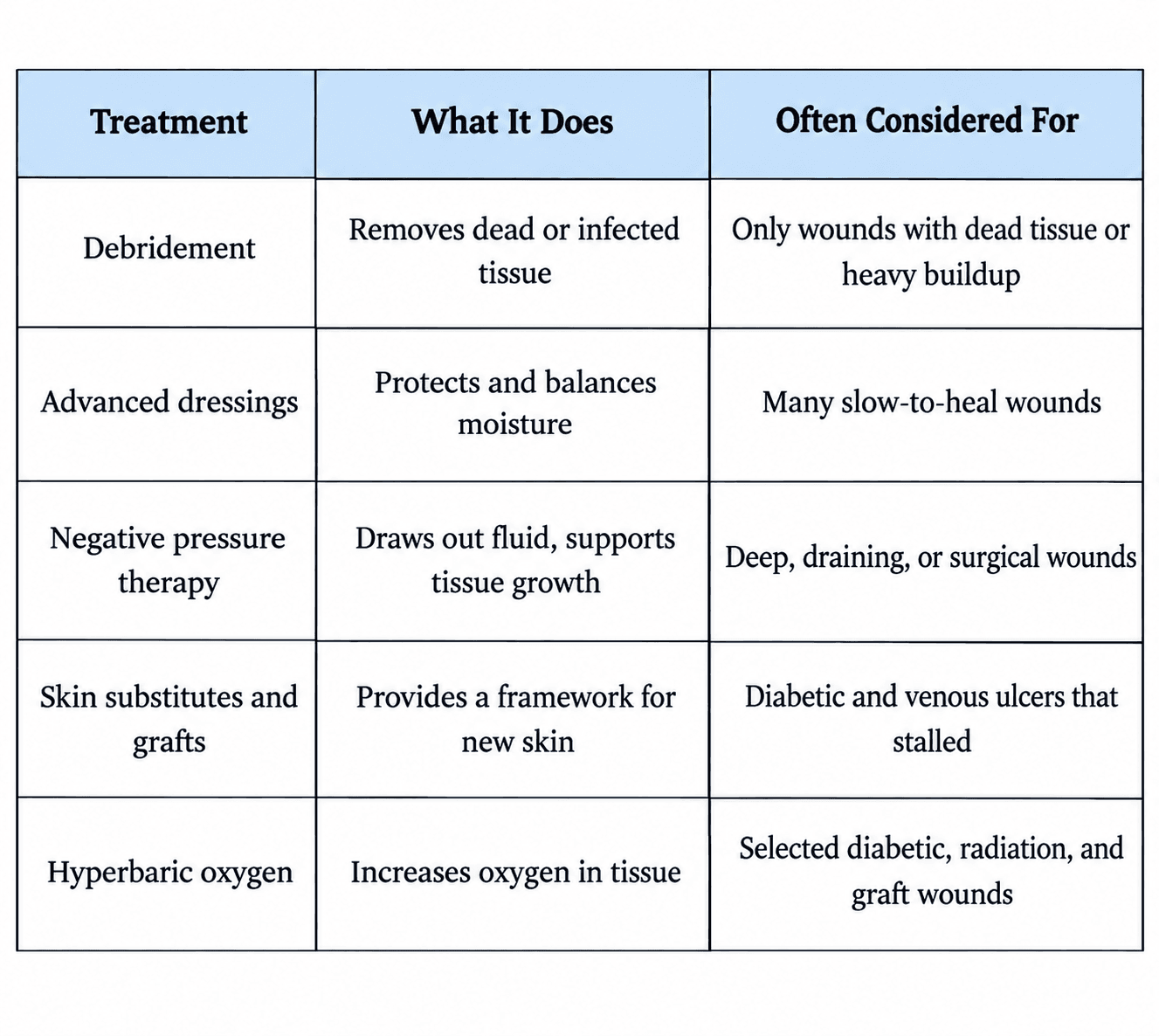
Healing cannot move forward while dead or infected tissue covers the wound. Debridement removes it, leaving a clean base where healthy tissue can grow. Not all wounds require debridement, though. If the wound bed is already clean and healthy, this step is not needed. When it is needed, it is often the first step before other advanced therapies.
Advanced Dressings and Negative Pressure Therapy
Modern dressings protect the wound, manage drainage, and keep moisture at the right level. Negative pressure wound therapy goes further. A sealed dressing connected to a gentle suction device draws out excess fluid and encourages new tissue, which is useful for deep or heavily draining wounds.
Skin Substitutes and Biological Grafts
When a wound lacks the structure the body needs to rebuild skin, a skin substitute or biological graft can act as a framework. New cells grow into this material and gradually close the wound. These products are generally considered after standard care has not produced improvement.
Hyperbaric Oxygen Therapy
During hyperbaric oxygen therapy, you breathe pure oxygen inside a pressurized chamber, which raises the oxygen reaching damaged tissue. It is used for selected wounds, including certain diabetic foot ulcers, radiation injuries, and compromised grafts, and it is usually given as a series of sessions.
Treatment Options Compared
This table sums up what each treatment does and the wounds it is most often considered for. Your specialist will choose based on your wound, not on the table alone.
What Recovery Looks Like
Many of these treatments are applied in a clinic without an operation, though some wounds still need surgical care. Visits usually include measuring the wound, cleaning it, applying the chosen therapy, and adjusting the plan if progress slows. People researching Non-Surgical Wound Healing Therapy in Jensen Beach should ask which options fit their wound and how progress will be tracked.
Recovery also depends on what happens between visits. These habits help:
● Keep dressings clean, dry, and changed as instructed
● Take pressure off the area with proper footwear, cushions, or repositioning
● Keep blood sugar within the range your care team sets
● Eat enough protein and stay hydrated
● Stop smoking, which limits blood flow to healing tissue
Choosing a Provider Close to Home
Look for a team that identifies the cause of the wound before choosing a product. Patients comparing Regenerative Wound Care Vero Beach options should ask how the provider decides who qualifies and what happens if the first approach does not work. For Biological Graft Wound Treatment Jensen Beach, ask which graft types are used, how often they are applied, and how healing is measured.
When to Consider Advanced Wound Healing West Palm Beach
Ask a wound specialist about advanced care if:
● A wound has not improved after four weeks of standard care
● A healed wound keeps returning
● A diabetic foot sore is not shrinking
● A wound is deep, draining, or slow to close after surgery or radiation
Spreading redness, warmth, pus, fever, or rapidly increasing pain needs prompt medical attention.
Conclusion
Advanced wound healing treatments do not replace good basic care, and they do not always speed up healing. How well they work depends on the wound type and the patient. They add targeted support when a wound needs more than dressings can offer, whether the barrier is dead tissue, poor oxygen, excess fluid, or missing skin structure. Matching the right therapy to the right wound, and following the plan closely, gives the body its best chance to recover.
A provider offering Advanced Wound Healing West Palm Beach residents can trust will explain each step, track your progress at every visit, and change the plan if healing slows. Regenxonline.com is a helpful place to start when a wound has stopped improving, and you want clear answers about the best next step.
Frequently Asked Questions
What is advanced wound healing?
It is a group of treatments used when standard care is not enough, including debridement (when dead tissue is present), negative pressure therapy, skin substitutes, grafts, and oxygen therapy, chosen to match the cause of the wound.
How do advanced treatments support wound healing?
They do not always speed up healing, and results depend on the wound type and the patient. When matched to the wound, they can remove barriers to healing, such as dead tissue, excess fluid, infection, or low oxygen, and give new tissue a better environment to grow. Results vary from person to person.
When should I consider advanced wound care?
Consider it when a wound has not improved after about four weeks of standard care, keeps returning, or is deep, draining, or affecting a diabetic foot. A specialist can confirm whether it suits you.
What is the difference between a skin substitute and a biological graft?
Both provide a framework for new skin growth. Skin substitutes are often bioengineered materials, while biological grafts come from donated or animal tissue. Your specialist selects the type based on the wound.
How long does advanced wound treatment take?
It depends on the wound's size, cause, and your health. Progress is measured at regular visits, and the plan is adjusted if healing slows, so timelines are reviewed rather than fixed.
Start Your Wound Care Plan
If your wound is not improving, speak with a wound care professional soon. Schedule a consultation today to review your options and start a plan built around your health.