
What Are the Most Common Types of Chronic Wounds and Their Treatments?
Advanced wound healing treatments can support recovery and, in some cases, speed it up by treating the reason a wound is stuck. Options such as debridement (only when dead or infected tissue is present), specialized dressings, negative pressure therapy, skin substitutes, biological grafts, and oxygen therapy clean the wound, improve conditions for new tissue, and protect against infection.
Some wounds close with basic care. Others stall, and that is when Advanced Wound Healing West Palm Beach services can make a real difference. These treatments are usually considered when a wound has not improved after about four weeks of standard care. In this article, we explain how each major treatment works, which wounds it suits, what recovery involves, and how to know when it is time to ask for help.
Key Takeaways
A wound that has not improved in four to six weeks should be checked by a professional.Diabetic, venous, arterial, and pressure wounds are the types seen most often.
- A wound that has not improved in four to six weeks should be checked by a professional.
- Diabetic, venous, arterial, and pressure wounds are the types seen most often.
- Good treatment targets the cause of the wound, not just the surface.
- Early care lowers the risk of infection and serious complications.
What Makes a Wound Chronic?
Healing normally moves through stages. Bleeding stops, inflammation clears the area, new tissue fills the gap, and skin closes over it. In a chronic wound, this process stalls, most often during the inflammation stage.
Poor circulation, diabetes, constant pressure, leg swelling, infection, smoking, and poor nutrition can all interrupt healing. Often more than one is involved, which is why a minor-looking wound can be so stubborn.
The Most Common Types of Chronic Wounds
Most chronic wounds fall into a few clear groups, each with its own cause and warning signs. Knowing which one you are dealing with makes it easier to choose the right care.
Diabetic Foot Ulcers
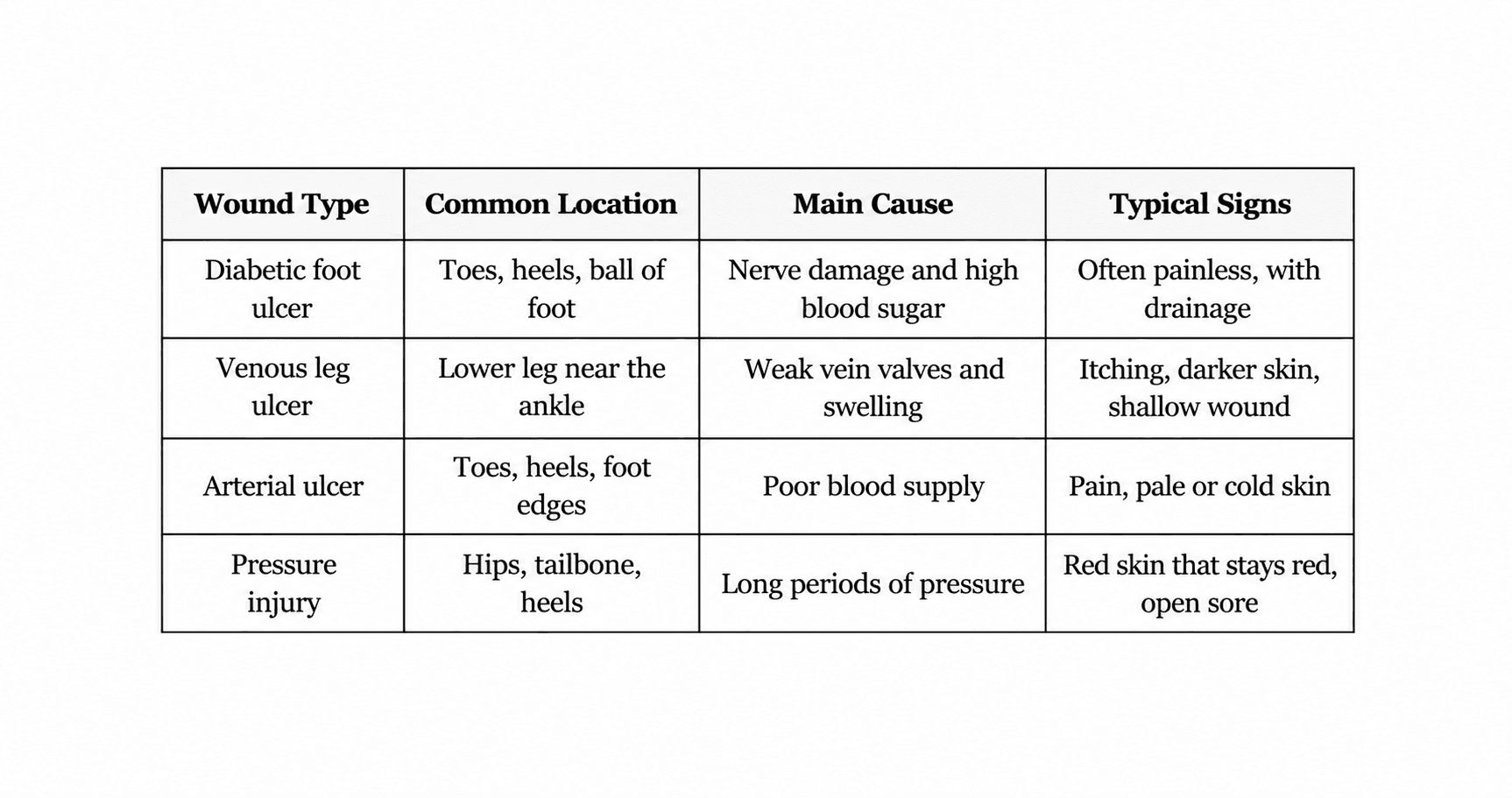
Nerve damage can dull feeling in the feet, so a blister or a pebble in a shoe may go unnoticed. High blood sugar then slows healing and weakens defense against infection, which is why people with diabetes are advised to check their feet daily.
Venous Leg Ulcers
When vein valves in the legs weaken, blood pools in the lower leg and pressure builds in the skin. The result is often a shallow wound near the ankle, along with swelling, itching, and darker skin around it. Venous ulcers are frequently described as the most common chronic wound of the lower leg.
Arterial Ulcers
Narrowed arteries deliver less blood to the feet, so even small injuries struggle to heal. The skin may look pale or feel cold, the foot pulse may be weak, and the wound is often painful.
Pressure Injuries
Also called bedsores, these form when steady pressure cuts off blood flow over a bony area such as the hips, tailbone, or heels. People who spend long hours in a bed or wheelchair are most at risk.
Chronic Wound Types at a Glance
The table below puts the four main wound types side by side so you can compare where they appear and what causes them. Use it as a quick reference, not as a substitute for a professional exam.
How Chronic Wounds Are Treated
No single treatment works for every wound. A specialist first identifies the cause, then builds a plan around it. Common approaches include:
- Debridement: careful removal of dead or infected tissue so healthy tissue can grow.
- Dressings: chosen to keep the wound moist but not soaked.
- Compression therapy: used for venous ulcers once circulation has been checked.
- Offloading: taking pressure off the area with special footwear, cushions, or repositioning.
- Infection control: thorough cleaning and antibiotics when needed.
- Negative pressure wound therapy: a gentle suction device that supports healing in selected wounds.
- Advanced options: skin substitutes, hyperbaric oxygen for certain wounds, and vascular procedures when blood flow is the problem.
- Whole body care: managing blood sugar, improving nutrition, and quitting smoking.
Not every option suits every patient, so a clinician decides based on the wound and overall health.
Finding the Right Care Near You
Anyone comparing options for Chronic Wound Treatment North Palm Beach should look for a provider who tests circulation, measures the wound at each visit, and works alongside primary care, diabetes, and vascular doctors.
The same standard applies to Chronic Wound Treatment Vero Beach, where a clear written plan and regular follow-up make it easier to see whether the wound is truly improving.
When to See a Chronic Wound Specialist Palm Beach Gardens
Book a visit if you notice any of these:
- A wound that has not improved in four weeks
- Redness, warmth, or swelling that is spreading
- Pus, a bad odor, or fever
- New or worsening pain
- Black or dark tissue in or around the wound
- Any sore on the foot if you have diabetes
If you are looking for a Non-Healing Wound Specialist Hobe Sound families can reach out easily; ask how soon you can be seen. Earlier evaluation gives you more treatment choices and a better chance of avoiding complications.
Conclusion
Chronic wounds come in several forms, but they share one thing: they heal best when the cause is found and treated early. Whether the problem is a diabetic foot ulcer, a venous leg ulcer, an arterial ulcer, or a pressure injury, a clear plan that addresses circulation, pressure, infection, and overall health makes a real difference. Waiting rarely helps, and small changes in a wound, such as new drainage or more pain, are worth taking seriously.
A Chronic Wound Specialist Palm Beach Gardens residents choose can guide each step, from diagnosis to follow-up, and adjust the plan as your wound responds. Regenxonline is a good place to start when you are ready to get a stubborn wound looked at.
Frequently Asked Questions
How long before a wound is considered chronic?
A wound that has not improved after four weeks of proper care, or has not fully healed within six to eight weeks, is generally considered chronic and should be evaluated by a professional.
What is the most common type of chronic wound?
Venous leg ulcers are often named the most common, while diabetic foot ulcers and pressure injuries are also frequent. The type a person develops depends on their health conditions and mobility.
Can a chronic wound heal on its own?
Rarely. Most need the cause addressed, such as improving circulation, relieving pressure, or controlling blood sugar, along with proper cleaning and dressings to support the healing process.
What are the signs of an infected wound?
Spreading redness, warmth, swelling, increasing pain, pus, a bad odor, or fever are warning signs. Contact a healthcare provider promptly if you notice any of them.
What happens if a chronic wound is left untreated?
It can become infected, grow larger, and damage deeper tissue. In serious cases, especially diabetic foot ulcers, untreated wounds can lead to limb loss, so early care matters.
Take the First Step Toward Healing
If a wound has not improved in a month, do not wait. Book a consultation today and get a clear plan to help your body heal safely.